
How to Build an Event Emergency Plan: A Practical Guide for Event Professionals.
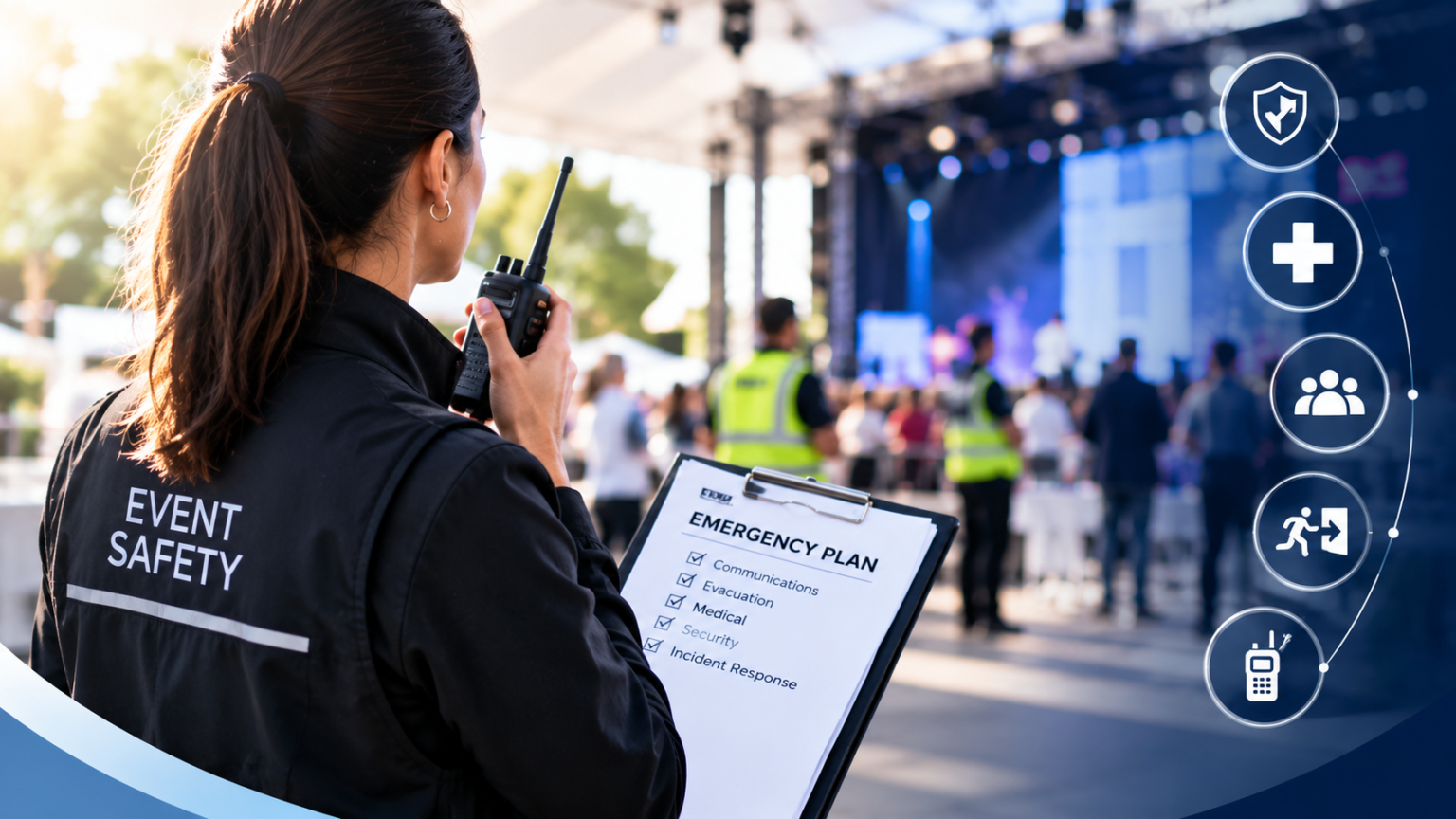
Every event professional hopes everything goes according to plan.
But experienced professionals know that unexpected situations can happen. A technical failure, medical incident, severe weather, security concern or supplier problem can quickly change the course of an event.
This is why an emergency plan should be part of the event planning process.
1. Identify the Possible Risks
Start by considering what could realistically go wrong at your event.
Depending on the type and location of the event, this could include:
- Medical emergencies
- Fire or evacuation
- Severe weather
- Power failure
- Technical problems
- Security incidents
- Crowd management issues
- Transport disruptions
- Supplier failure
- Communication problems
You do not need to predict every possible situation. Focus on the risks that are most relevant to your event.
2. Establish Clear Responsibilities
Everyone on the event team should know their role if an emergency occurs.
Identify who will be responsible for:
- Contacting emergency services
- Managing attendees
- Communicating with speakers
- Coordinating with the venue
- Managing suppliers
- Communicating important updates
- Recording incidents
Avoid having everyone assume that someone else will take responsibility.
3. Know Your Venue
Before the event, make sure your team understands the venue.
Identify:
- Emergency exits
- Assembly points
- First-aid facilities
- Fire equipment
- Accessible routes
- Security points
- Emergency contact information
Where appropriate, walk through the emergency procedures with the venue team before the event begins.
4. Create a Communication Plan
During an emergency, unclear communication can make a difficult situation worse.
Decide in advance how the event team will communicate.
This might include:
- Phone calls
- Messaging groups
- Radios
- Internal communication channels
- Designated team leaders
The team should know who has authority to communicate official instructions.
5. Prepare Attendee Communication
Not every incident requires the same response.
If attendees need to be informed, communication should be clear, calm and practical.
Tell people:
What is happening → What they need to do → Where they need to go → What happens next
Avoid unnecessary information that could create confusion.
6. Consider Accessibility
Emergency planning should consider the needs of all attendees.
Think about people who may require assistance with:
- Mobility
- Hearing
- Vision
- Communication
- Medical needs
The venue and event team should understand how appropriate assistance will be provided.
7. Prepare Backup Options
Some problems may not be emergencies but can still seriously affect an event.
Consider backup arrangements for:
- Power
- Internet
- Presentation equipment
- Speakers
- Suppliers
- Transportation
- Registration systems
Having alternatives prepared can help the team respond quickly when something changes.
8. Brief the Team
An emergency plan is only useful if the people responsible for implementing it understand it.
Before the event, brief the relevant team members on:
- Key risks
- Emergency procedures
- Responsibilities
- Communication channels
- Emergency contacts
- Evacuation arrangements
Make sure everyone knows who to approach if they are unsure what to do.
9. Review After the Event
If an incident occurs, document what happened and review the response afterwards.
Ask:
- What happened?
- How did the team respond?
- What worked?
- What could have been handled differently?
- What should be changed before the next event?
This turns an incident into an opportunity to improve future planning.
Final Thought
Good emergency planning is not about expecting something to go wrong.
It is about being prepared enough to respond calmly and effectively if something does.
For event professionals, preparation, communication and clear responsibilities can make a significant difference when unexpected situations occur.